

On the Water: Cold start to the month of February
January closed out cold in Southwest Florida, and the first week of February is forecasted for the coldest weather we have seen in over 15 years. No doubt this will affect fishing, but how much depends on if the cold continues or we move to a warming trend.
Many of our inshore fish seek protection from the cold as they relocate to protected areas with deeper water. If it stays cold for too long, some species like snook likely will parish, as they are a native fish and cannot tolerate extended near freezing temperatures. The last major snook kill from cold weather was 2010. Let’s hope we avoid another kill from this latest cold weather.
When you think of areas to fish with deep water and protection from the cold inshore, canals and deeper protected bays come to mind as they offer both. Shrimp fished slowly on the bottom is the best bet, rigged on a jig head or a variation of light weights to get it near the bottom. Low and slow is the key when cold as fish are conserving energy and not likely to exert effort chasing food. Fish over drop-offs and structure; drop-offs may seem slight, just a foot or so, but that’s often all that’s needed.
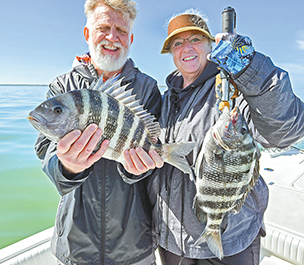
It will take time for inshore water temperatures to rise; during this period sheepshead are the best bet. Cold does not really affect them, in fact some of the best fishing occurs on the coldest days.
It’s hard to predict the rest of the month. If it remains cold, fishing protected areas is the best bet. If we break into a stretch of warm weather, we begin to move slowly away from winter and into spring fishing.
If and when the water warms into the 70s, bait fish return. As bait moves in with the warming water, the larger fish also show up. What and where really depends on water temperature. Large seatrout are often the first to arrive around inshore waters followed by redfish and snook. Spanish mackerel and bluefish follow the bait inshore and are often running in schools. Sharks and cobia also make an appearance. But again, this really depends on the water temperature. I am hoping the cold is behind us with warmer days ahead.
Bottom fishing nearshore reefs can yield a mixed bag of many species that may include sheepshead, snapper, grunts, pompano, permit, grouper and others. Cobia, barracuda, sharks, king and Spanish mackerel are prowling nearshore waters as well. Further west in Gulf waters, red groupers are caught over hard bottom fishing depth 70 feet and deeper.
February is one of the busiest months in Southwest Florida with traffic congestion and crowds everywhere. On the water it’s less hectic and way more relaxing. Given the choice of a day fighting the crowds and traffic or on the water fighting fish is an easy pick. I believe most would choose a relaxed day on the water every time.
To stay up to date with current regulations, go to www.myfwc.com or better, download the Fish Rules app. It updates every time you open it. It’s free, and has all local fish species, regulations, and pictures of each.
If you have a fishing report or for charter information, please contact us at Gulf Coast Guide Service; phone (239) 410-8576, email gcl2fish@live.com or you visit us on the Web at www.fishpineisland.com.
Have a safe week and good fishin’.
As a lifetime resident of Matlacha and Pine Island, Capt. Bill Russell has spent his life fishing and learning the waters around Pine Island and Southwest Florida, and as a professional fishing guide for over 20 years.