

GPICA discusses local water quality with Calusa Waterkeeper Sue Dahod
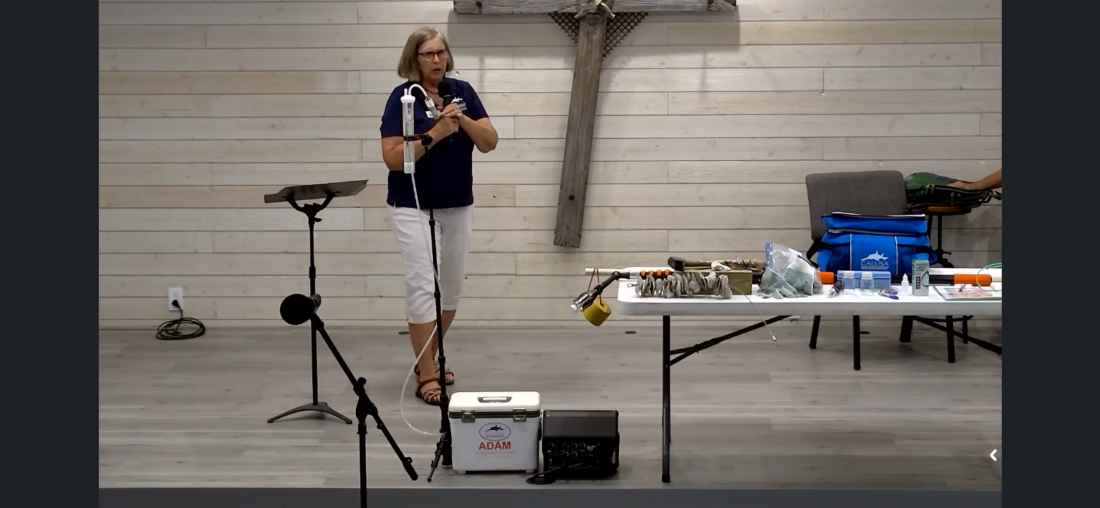
Greater Pine Island Civic Association board member and Calusa Waterkeeper Ranger Sue Dahod gave a presentation on Pine Island water quality issues at the GPICA meeting Tuesday, Aug. 4
Dahod began by introducing herself to attendees as the ranger leader for Pine Island and Matlacha, she then told everyone there are approximately a dozen other active rangers within this zone.
Although the CWK began in 1995, as the Caloosahatchee River Citizens Association Inc., aka Riverwatch, they were admitted as an affiliate of the larger Waterkeeper Alliance in 2015, and adopted the name, Calusa Waterkeeper in 2016, she said.
“Our mission is to protect and restore the Caloosahatchee River from Lake O (Okeechobee) to the estuary. Our vision is a future where the water is clean,” Dahod said.
The strategy, she said, is to involve the community, with events such as speaking at meetings like the GPICA or engaging politicians and policy makers in an effort to effect policy for better environmental quality with respect to water. The CWK logo features a smalltooth sawfish, she explained. This species, which is native to local waters, is critically endangered.
“They had been protected by the Endangered Species Act up until about a month ago, when habitat loss was taken off of the conditions from which a species would be considered endangered. They’re protected still, but their critical protections in our area are protecting their habitat, so they have their pups or their babies, live-born,” Dahod said, explaining that they are approximately 3 feet long at birth.
For those who might be interested, Dahod explained a bit about the CWK Ranger Program, saying currently there are quite a few volunteers. The program is unique to some of the Florida Waterkeeper groups, she said.
“We operate with a fairly, relatively small staff and a lot of volunteers. We patrol lots and lots of territory around the world as an alliance,” Dahod said.
She brought all the surrounding area Riverwatch and Waterkeeper organizations to the group’s attention, explaining that the local zone’s group is typical in size with three staff members and approximately 60 rangers and volunteers.
“We are all non-profits and we operate mainly to be the stewards of the watersheds,” Dahod said.
Any collected water in a given area would be that region’s watershed, which in the local area, would be gathered in the Caloosahatchee River, she explained. Just north of our area, she said, is the Manatee River, the Myakka River and the Peace River. These are all different watersheds than our Caloosahatchee watershed.
“We have multiple goals. They’re all kind of connected. We strive to improve the water in our jurisdiction, including the impacts on the river and the estuary systems. Including habitat and marine life. We promote public education, so we do talks and private education for people through our Ranger Program and also through general outreach about what’s happening in our watershed,” Dahod said.
Part of their community outreach is letting folks know when anything is going on in their neighborhood by increasing public awareness, she said.
“We study the effects of different commercial and agricultural changes on our water and we do this by monitoring and working to sample those watersheds so we can understand, more scientifically, what’s going on,” Dahod said.
In addition, the organization will observe and participate in the activities of public bodies, such as city council meetings, board of county commissioner meetings and any other circumstance where they feel they can influence advocacy for clean water, she said.
Some of the programs currently offered which have the potential for great impact include, Ranger Academy, Vertical Oyster Garden workshops, Seagrass Monitoring, Once a Month Fecal Indictor Bacterial Measurement, Aerosolized Toxin Monitor and Advocacy. The yearly Ranger Program is coming up and for those interested, she said now is a good time to sign up. There are four courses over a period of four Saturdays, for a total of approximately 10 hours. The cost is $125 per person. Orientation for this program will be on Aug. 12, with the rest of the courses through September and October.
Too see this meeting in its entirety, visit Greater Pine Island Civic Association Facebook page.
The next meeting will be on Tuesday Sept. 1, at 6:30 p.m., with speaker Kevin Karnes , the Lee County Clerk of Courts.